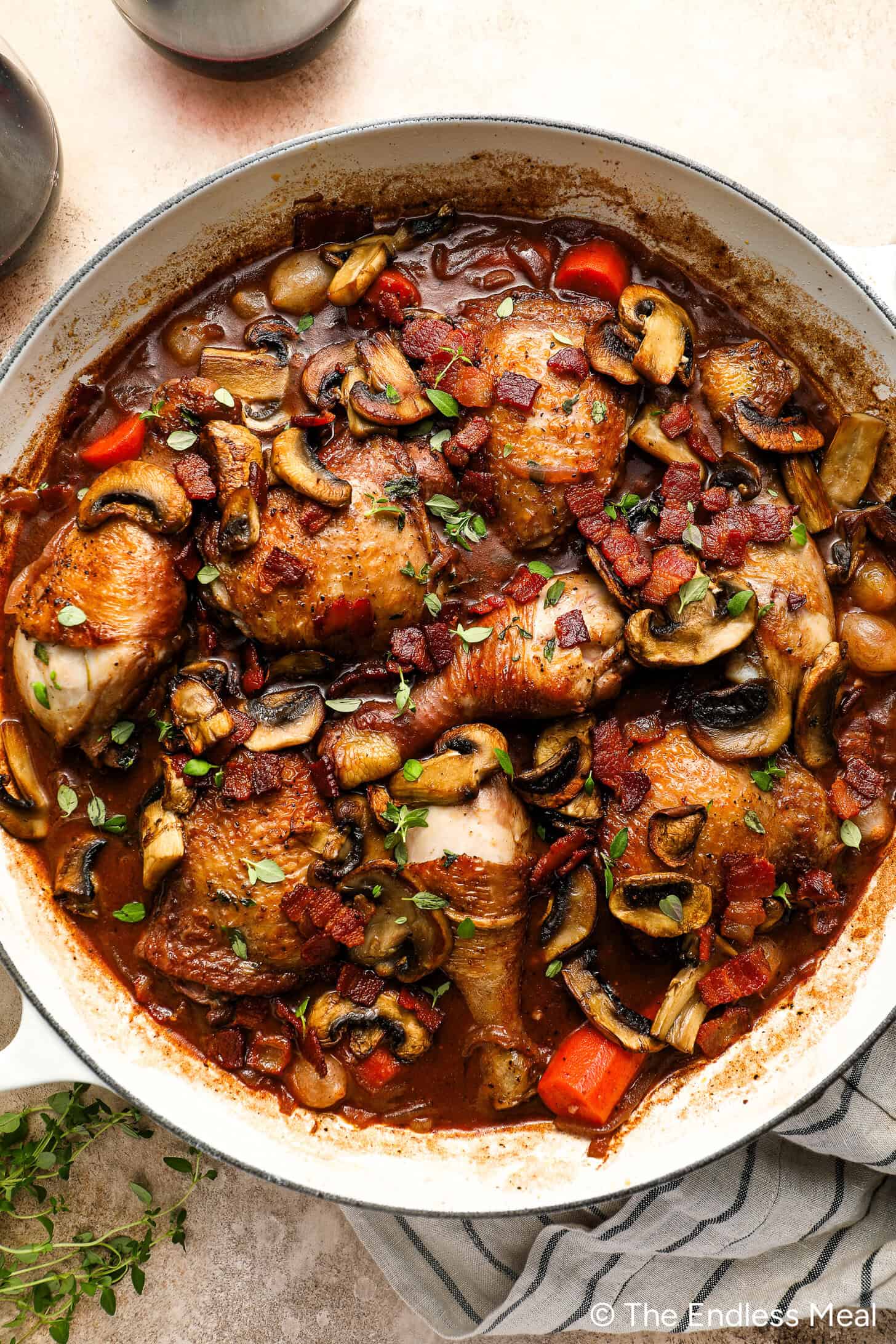
Julia Child's Coq au Vin: A Timeless French Culinary Journey
Imagine stepping into a cozy French bistro, the air rich with the scent of slow-braised chicken, aromatic herbs, and robust red wine. This evocative scene is precisely what mastering Classic Coq au Vin: Your Bistro-Style French Comfort Meal promises to deliver, and no one championed its home-cooked elegance quite like Julia Child. More than just a recipe, Coq au Vin is an experience – a deeply comforting, rustic stew that transforms simple ingredients into an extraordinary meal. While its name might sound intimidatingly fancy, the beauty of this iconic French dish lies in its accessibility and the sheer depth of flavor it achieves with patience and a few key techniques.
Often considered the poultry counterpart to Beef Bourguignon, Coq au Vin (pronounced kohk oh VAHN) is a celebration of braised chicken in a rich, tangy red wine sauce, traditionally enhanced with smoky bacon, earthy mushrooms, and sweet pearl onions. Julia Child, with her legendary approachability, demystified this classic for home cooks, proving that authentic French cuisine was within everyone's reach. Her version, renowned for its simple yet profound layers of flavor, brings that coveted bistro experience right to your dinner table, promising fall-apart tender chicken bathed in a velvety sauce that begs for a crusty baguette.
The Enduring Appeal of Julia Child's Signature Stew
What sets Julia Child's approach to classic Coq au Vin apart is its elegant simplicity. While some variations of this traditional French fricassee might include carrots or celery, Julia's recipe focuses intensely on the core elements: quality chicken, deeply savory bacon or pancetta, earthy mushrooms, sweet caramelized onions, and, of course, a generous pour of good red wine. This deliberate restraint highlights the natural flavors of each ingredient, allowing them to meld into a harmonious symphony.
Her recipe isn't about complexity for complexity's sake; it's about building foundational flavor through careful browning, slow braising, and the magic of deglazing. The result is melt-in-your-mouth chicken steeped in a rich, buttery red wine sauce that feels both sophisticated and profoundly comforting. It's the kind of dish that evokes the feeling of an autumn walk, with crisp leaves underfoot and the smell of woodsmoke in the air – a true mood-setter for any cozy dinner. This homey French-style stew, cooked ideally in an enameled Dutch oven, delivers a culinary escape without ever leaving your kitchen.
Mastering the Art of Classic Coq au Vin: Essential Techniques
While Coq au Vin might involve a few steps and a bit more time than a weeknight scramble, it is far from difficult. The process is meditative, rewarding each moment spent with an unparalleled depth of flavor. To truly master this classic Coq au Vin, consider these critical techniques that elevate the dish from good to unforgettable.
The Power of the Marinade: A Deep Dive into Flavor
One of the most impactful steps, often overlooked by beginners, is marinating the chicken. Traditionally, Coq au Vin was made with an older, tougher rooster (coq in French), which absolutely necessitated a long soak in red wine to tenderize the meat. While modern free-range chicken or chicken legs are much more forgiving, the marinade remains invaluable. Letting your chicken pieces sit in red wine infused with aromatics (like garlic, bay leaves, and thyme) for at least 2 hours, and ideally overnight, does several things:
- Tenderizes the Meat: The acidity in the wine gently breaks down muscle fibers, ensuring a succulent, melt-in-your-mouth texture.
- Infuses Deep Flavor: The chicken absorbs the complex notes of the wine and aromatics, ensuring flavor penetrates beyond the surface.
- Contributes to the Sauce: The marinade itself often becomes the base for your braising liquid, carrying all those infused flavors directly into your final sauce.
Choosing a good quality, dry red wine – such as a Pinot Noir, Burgundy, or even a robust Côtes du Rhône – is crucial here, as its character will define the overall taste of your stew.
Achieving Golden-Brown Perfection: The Maillard Reaction's Magic
Before any braising begins, browning your chicken is a non-negotiable step that significantly impacts the final flavor and color of your sauce. It’s all about the Maillard reaction – the chemical process that creates rich, savory flavors and a beautiful golden-brown crust. To achieve this:
- Pat the Chicken Dry: This might seem small, but it's monumental. Excess moisture prevents browning and causes splattering. Dry chicken sears beautifully, creating that coveted crust.
- Don't Crowd the Pan: Brown the chicken in batches if necessary, ensuring each piece has enough space to make direct contact with the hot pan. Crowding lowers the pan's temperature and steams the chicken instead of searing it.
- Sear Until Golden: Aim for a deep, golden-brown hue on all sides. These caramelized surfaces are packed with flavor that will contribute immensely to your sauce.
Deglazing: Unlocking Hidden Flavors
After you've sautéed your bacon and seared your chicken, you'll notice wonderfully caramelized bits sticking to the bottom of your Dutch oven. These "sucs" (pronounced sooks) are pure flavor gold, the essence of everything you've just browned. Ignoring them would be a culinary crime! Deglazing is the act of adding liquid (usually wine, often the marinade) to the hot pan to loosen these flavorful bits, dissolving them into the sauce.
Using a wooden spoon or spatula to scrape up these sucs as the wine simmers helps them melt into the liquid, creating a sauce that is incredibly complex, deeply savory, and rich in umami. This step is a cornerstone of French cooking and one of the secrets to an outstanding classic Coq au Vin.
To Flambé or Not to Flambé: A Touch of Tradition
Traditionally, Coq au Vin involves flambéing the chicken with a splash of Cognac or brandy before adding the wine. This dramatic step serves multiple purposes:
- Adds Flavor: The high heat caramelizes the alcohol, adding a subtle depth and a slightly nutty flavor that complements the red wine.
- Burns Off Alcohol: While the wine will simmer for hours, flambéing quickly burns off some of the raw alcohol notes from the brandy, leaving only the pure essence.
- Creates Drama: Let's be honest, it's impressive!
If the idea of igniting alcohol in your kitchen makes you nervous, rest assured: you can absolutely skip the flambé. The dish will still be delicious. You can simply add the Cognac and allow it to simmer for a few minutes to cook off the alcohol naturally before proceeding with the wine. For more insights on perfecting this dish, be sure to check out Unlock Flavor: Essential Tips for Perfect Coq au Vin at Home.
Serving Your Culinary Masterpiece
Once your classic Coq au Vin has slowly braised to perfection, with chicken that's fall-apart tender and a sauce that's rich and glossy, it's time to serve this magnificent dish. The beauty of Coq au Vin is its versatility when it comes to accompaniments. For the ultimate cozy dinner, pair this delectable chicken with:
- Creamy Mashed Potatoes: Their velvety texture and mild flavor are perfect for soaking up every last drop of the luscious red wine sauce.
- Wide Egg Noodles: A classic pairing that cradles the sauce beautifully.
- Soft Polenta: Adds a rustic, comforting element, similar to mashed potatoes but with a different texture.
- Roasted Potatoes: For a heartier option, especially if you enjoy a crispy exterior.
- Crusty Baguette: Essential for wiping the plate clean and savoring every bit of the exquisite sauce.
Garnish with fresh parsley for a touch of color and brightness, and consider serving with the same red wine you used in the recipe to complete the authentic French bistro experience.
Embrace the French Culinary Spirit
Julia Child's classic Coq au Vin is more than just a recipe; it's an invitation to slow down, savor the process, and delight in the rich rewards of traditional French cooking. It demonstrates that truly spectacular food doesn't have to be overly complicated, but rather relies on quality ingredients, thoughtful technique, and a dash of passion. Whether you're a seasoned cook or embarking on your first foray into French cuisine, mastering this dish will undoubtedly leave you with a profound sense of accomplishment and a table full of delighted diners. So gather your ingredients, uncork a good bottle of wine, and prepare to create a culinary masterpiece that truly stands the test of time. Dive deeper into the secrets of enhancing your Coq au Vin with Unlock Flavor: Essential Tips for Perfect Coq au Vin at Home.
